
Rwanda’s Emerging Art Scene – Where Creativity Rebuilds a Nation

Scene Lead
Morning light spills across the hills of Kigali, glinting off murals that stretch across city walls — portraits of strength, hope, and rebirth. Inside open studios, brushes sweep against canvas as artists blend the colors of memory with the rhythm of modern life. Drums echo from courtyards, dancers rehearse in mirrored rooms, and poets rehearse lines that pulse with pride.
This is Rwanda’s new heartbeat — an art movement that rises from reflection and resilience. Twenty-five years after rebuilding from unimaginable loss, the country now finds expression not only in its progress but in its creativity.
Across Kigali and beyond, a new generation of painters, sculptors, filmmakers, and performers is transforming Rwanda into one of Africa’s most dynamic cultural destinations.
Art here is not decoration — it is declaration.
Introduction –Rwanda’s Emerging Art Scene The Renaissance of Expression
For years, Rwanda’s global identity was tied to its recovery story. Today, that story is expanding — told not only through words, but through paint, rhythm, and movement. Rwanda’s Emerging Art Scene The nation’s emerging art scene represents the next chapter of its evolution: creative, confident, and conscious.
The government’s support for cultural innovation, coupled with youth-led collectives and gallery networks, has created fertile ground for expression. Kigali, the capital, has become an open-air gallery — every wall a canvas, every gathering a collaboration.
From bold contemporary exhibitions to traditional crafts reimagined, Rwanda’s art is redefining what it means to create from memory and possibility.

Kigali – The Creative Capital
Kigali’s skyline may gleam with modernity, but its soul beats in its art spaces. The city’s creative centers are not hidden — they are alive and accessible, welcoming both locals and travelers to witness Rwanda’s creative transformation.
Inema Arts Center
Founded by brothers Emmanuel and Innocent Nkuranga, the Inema Arts Center stands as a symbol of Rwanda’s creative resurgence. It’s more than a gallery — it’s a community. The space bursts with color, housing studios for emerging artists, a performance courtyard, and workshops that nurture local talent.
Walls here speak in rhythm: abstract portraits of women in motion, collages made from recycled material, sculptures shaped by imagination and history. Beyond visual art, Inema hosts dance classes, musical performances, and youth outreach programs — all dedicated to turning creativity into empowerment.
Niyo Arts Gallery
A few streets away, Niyo Arts merges artistry with advocacy. Founded by painter Innocent Nkurunziza, this gallery and community center supports underprivileged children through art education. The walls are alive with vibrant strokes of identity — African queens, daily life scenes, and the universal language of resilience.
Visitors can meet the artists, watch them work, or even join short workshops. Every piece sold here directly funds community programs.
Kigali Public Art and Murals
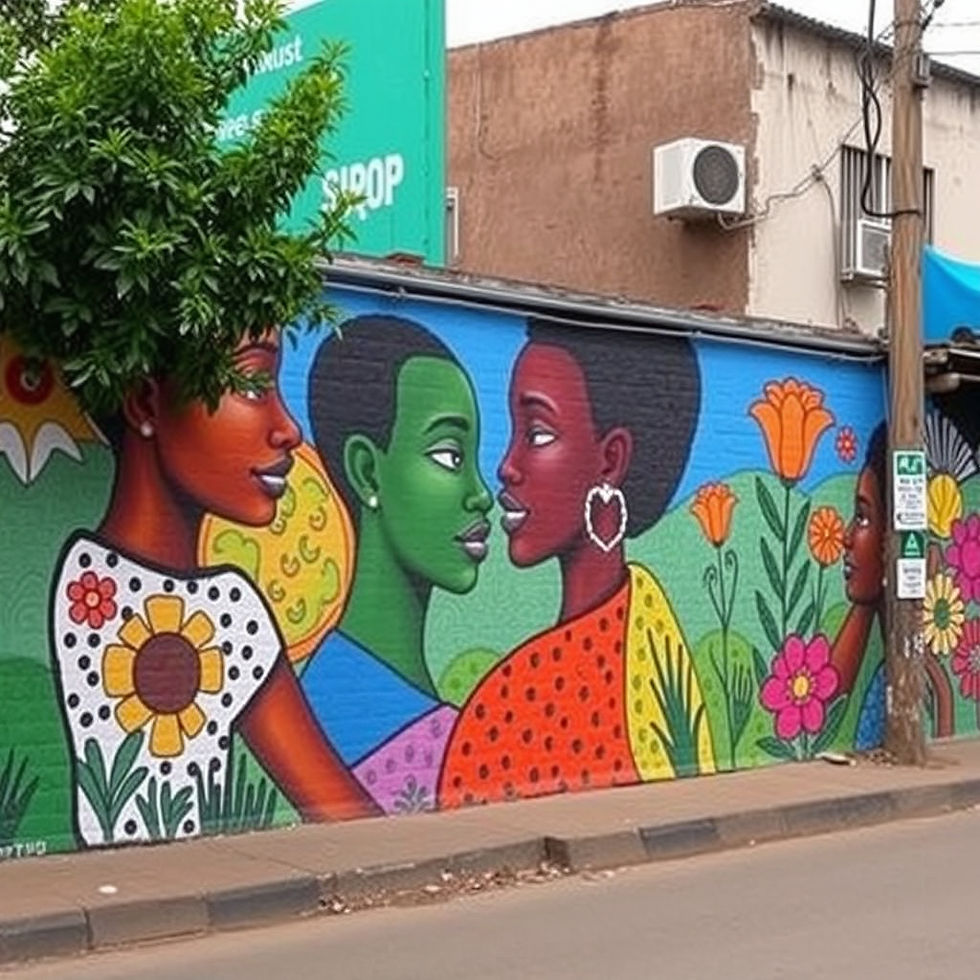
Outside the galleries, Kigali’s walls have become museums of the people. Bold murals by local collectives like Kurema Kureba Kwiga decorate streets with messages of unity, sustainability, and creativity. Each brushstroke transforms public space into storytelling.
Beyond Kigali – Creative Communities in the Hills
While Kigali is the center of Rwanda’s art world, creativity thrives across the country.
Huye and Butare – The Academic Pulse
In southern Rwanda, the University of Rwanda in Huye has long been a hub of cultural thought. Art students fill studios with charcoal sketches and textile experiments, inspired by the region’s academic energy and traditional craftsmanship.
Local cooperatives produce handmade ceramics, baskets, and textile patterns, keeping indigenous art forms alive while experimenting with new techniques.
Musanze – Art in the Shadow of Volcanoes
In northern Rwanda, near Volcanoes National Park, Red Rocks Cultural Center merges art, tourism, and conservation. Travelers can participate in painting sessions, music nights, and crafts workshops that link creativity to environmental awareness.
Art here feels organic — the paint mixed with volcanic soil, the sculptures carved from local stone, the songs echoing through mountain air.
Contemporary Movements – Where Tradition Meets Modernity
Rwanda’s art scene thrives on balance — merging ancestral roots with forward-thinking design.
Traditional Craft as Modern Expression
Ancient techniques like imigongo painting, originally created by women in eastern Rwanda, are finding new audiences. This geometric art, once used to decorate clay walls, now appears on modern canvases, fabrics, and furniture.
Artists reinterpret imigongo with contemporary palettes — black, gold, white, and crimson — creating works that bridge past and present.
Fashion and Design
Kigali’s fashion designers are redefining sustainability through local textiles and circular creativity. Brands like Haute Baso, Moshions, and Uzuri K&Y blend cultural motifs with modern aesthetics, crafting everything from bespoke suits to eco-friendly shoes made from recycled materials.
Their studios are extensions of Rwanda’s creative philosophy — responsible, inclusive, and unapologetically local.
Music, Film, and Performance
The energy of Rwanda’s visual art spills into its performance scene. Young filmmakers showcase work at the Kigali Film and Fashion Festival, while musicians fuse traditional inyarwanda drums with electronic beats.
Spaces like Kigali Cultural Village and The Hut host performances that celebrate diversity — from poetry slams to jazz nights that drift into the hills.
Social Impact Through Art
In Rwanda, art is activism in color. Nearly every creative space integrates social purpose into its practice.
Inema’s Art with a Mission program funds art education for disadvantaged youth.
Niyo Foundation uses proceeds from art sales to provide healthcare and shelter for street children.
Kurema Kureba Kwiga paints public murals that tackle environmental and gender equality issues.
Art, therefore, is not detached from daily life — it is woven into Rwanda’s fabric of community building.
Cultural Festivals and Global Recognition
Rwanda’s cultural calendar continues to expand as its creative voice grows louder on the world stage.
KigaliUp Music Festival
A fusion of African rhythms and global sounds, KigaliUp brings together artists from across the continent. It’s a celebration of unity, art, and rhythm beneath the city’s night sky.
Ubumuntu Arts Festival
Held annually at the Kigali Genocide Memorial Amphitheater, this festival explores humanity through theater, dance, and performance art. Founded by actress and director Hope Azeda, it gathers global creatives to discuss empathy, reconciliation, and resilience.
Kigali Triennial and East African Art Fair
These emerging exhibitions are transforming Rwanda into a key cultural destination, showcasing fine art, installations, and photography that challenge perceptions of African identity.
Do’s and Don’ts for Art Lovers
Do’s
Visit local studios directly — most artists welcome visitors.Purchase art ethically — buy from verified galleries or artist cooperatives.Engage in dialogue — artists love sharing their inspirations and process.Support workshops and community programs whenever possible.
Don’ts
Don’t photograph artwork without permission.Don’t haggle aggressively — art is livelihood.Don’t overlook smaller, independent artists outside Kigali’s main scene.
Highlights – Where to Experience Rwanda’s Art Scene
Inema Arts Center: Kigali’s creative hub and global symbol of African contemporary art.
Niyo Arts Gallery: Art with impact and education for street children.
Red Rocks Cultural Center (Musanze): Creative tourism meets conservation.
Haute Baso and Moshions: Fashion rooted in heritage and sustainability.
Kigali Cultural Village: Live performances, art markets, and workshops under one roof.
Recommendations
Begin your exploration in Kigali — visit Inema, Niyo, and Kurema murals in Nyamirambo.Travel north to Musanze for cultural workshops at Red Rocks.Attend a local performance or poetry night at Kigali Cultural Village.Support youth-run art collectives and purchase ethically sourced crafts.Time your visit around July to coincide with the Ubumuntu Arts Festival.
Conclusion – A Nation Painted in Progress
As dusk falls over Kigali, studio lights flicker on, and the sound of laughter mixes with the scent of turpentine and rain. Painters lean over canvases; dancers rehearse under open skies. The city hums with quiet creation.
Rwanda’s art scene is no longer emerging — it’s flourishing. It stands as a reflection of the nation’s greatest truth: that creation follows healing, and expression is the most powerful form of peace.
From murals to music, from imigongo patterns to digital design, every stroke of paint and every note of rhythm carries the same message — Rwanda is not defined by what happened, but by what it is becoming.
And for those who walk through its galleries and streets, art becomes more than beauty — it becomes a bridge between the past and the possible.
Because in Rwanda, creativity isn’t just seen — it’s felt.


Comments