
🏔️ Kilimanjaro Routes Compared: Machame vs Marangu vs Lemosho vs Rongai
- Travie E360

- Oct 20, 2025
- 6 min read
Updated: Oct 21, 2025
By Travie E360 | Published by Zanzibar Gateway
🌅 Scene Lead – The Mountain With Many Roads
Before dawn, the slopes of Kilimanjaro are quiet — only the wind and distant songs of porters echo across the valleys. Each trail winding up the mountain tells its own story: some carved by time and legend, others by dreamers chasing sunrise above the clouds.
Choosing your path here isn’t just logistics — it’s identity.The route you take defines your journey, your pace, your rhythm of breath. Because on Kilimanjaro, every path feels like a metaphor for life itself: some short and steep, some long and forgiving, all leading toward one humbling truth — the mountain rewards patience, not pride.

🌍 Introduction – The Path You Choose Matters
Climbing Kilimanjaro isn’t just about standing at Uhuru Peak (5,895m); it’s about how you get there.The mountain offers seven official routes, each a world of its own. Some are scenic and soulful, others fast and efficient. Some test your endurance; others test your resolve.
This guide compares the four most popular routes — Machame, Marangu, Lemosho, and Rongai — breaking down their beauty, difficulty, and success rates.Because the path you choose determines not just your chances of summiting, but the kind of story you’ll bring back down.
🗺️ 1️⃣ Quick Overview of the Kilimanjaro Routes
Route | Nickname | Duration | Accommodation | Success Rate | Highlights |
Machame | The Whisky Route | 6–7 days | Camping | 70–80% | Scenic, iconic, challenging |
Marangu | The Coca-Cola Route | 5–6 days | Huts | 40–50% | Cheapest, easy logistics |
Lemosho | The Scenic Route | 7–8 days | Camping | 85–90% | Breathtaking views, great acclimatization |
Rongai | The Northern Trail | 6–7 days | Camping | 70–80% | Quiet, dry, peaceful |
The first decision every climber makes isn’t about altitude or fitness — it’s about direction.Do you want comfort or challenge? Crowds or solitude? Cost-efficiency or the highest chance of success?Let’s explore what each path truly feels like.
🥾 2️⃣ Marangu Route – “The Coca-Cola Route”
If Kilimanjaro were a storybook, Marangu would be the first chapter — familiar, friendly, and deceptively simple.
Overview
Duration: 5–6 days
Accommodation: Mountain huts
Success Rate: 40–50%
Pros
✅ Cheapest route
✅ Comfortable huts (no tents required)
✅ Simplified logistics — great for those on a tight schedule
Cons
❌ Low acclimatization time (too short for altitude adaptation)
❌ Crowded — especially during peak season
❌ Lowest summit success rate among all routes
Vibe & Experience
Nicknamed the “Coca-Cola Route” because of its accessibility and comfort, Marangu offers the easiest infrastructure — but also the lowest odds of reaching the top.Many first-timers choose it expecting an “easier” climb, yet find out too late that the body can’t rush altitude.
✨ Travie Tip:Marangu teaches the mountain’s first lesson — there are no shortcuts to the summit.Best for: Budget-conscious climbers or those who prefer hut lodging over camping.
🥾 3️⃣ Machame Route – “The Whisky Route”
If Marangu is the first chapter, Machame is the legend. This is the most popular route, the one most people imagine when they picture the Kilimanjaro journey.
Overview
Duration: 6–7 days
Accommodation: Camping
Success Rate: 70–80%
Pros
✅ Stunningly scenic — rainforest to glaciers
✅ Balanced acclimatization with “climb high, sleep low” strategy
✅ Great for first-timers
Cons
❌ Can be crowded during high season
❌ Physically demanding — summit night is long and cold
Vibe & Experience
The Machame Route is a symphony of landscapes: jungle, moorland, alpine desert, and the surreal snowfields near the summit.It’s a route of rhythm — intense climbs balanced by calm descents. Each day feels cinematic, each campsite alive with the energy of fellow adventurers.
💭 Travie Reflection:If you want to feel the pulse of Kilimanjaro — the laughter, the songs, the silence — Machame is your melody.Best for: First-time climbers seeking beauty, balance, and community.
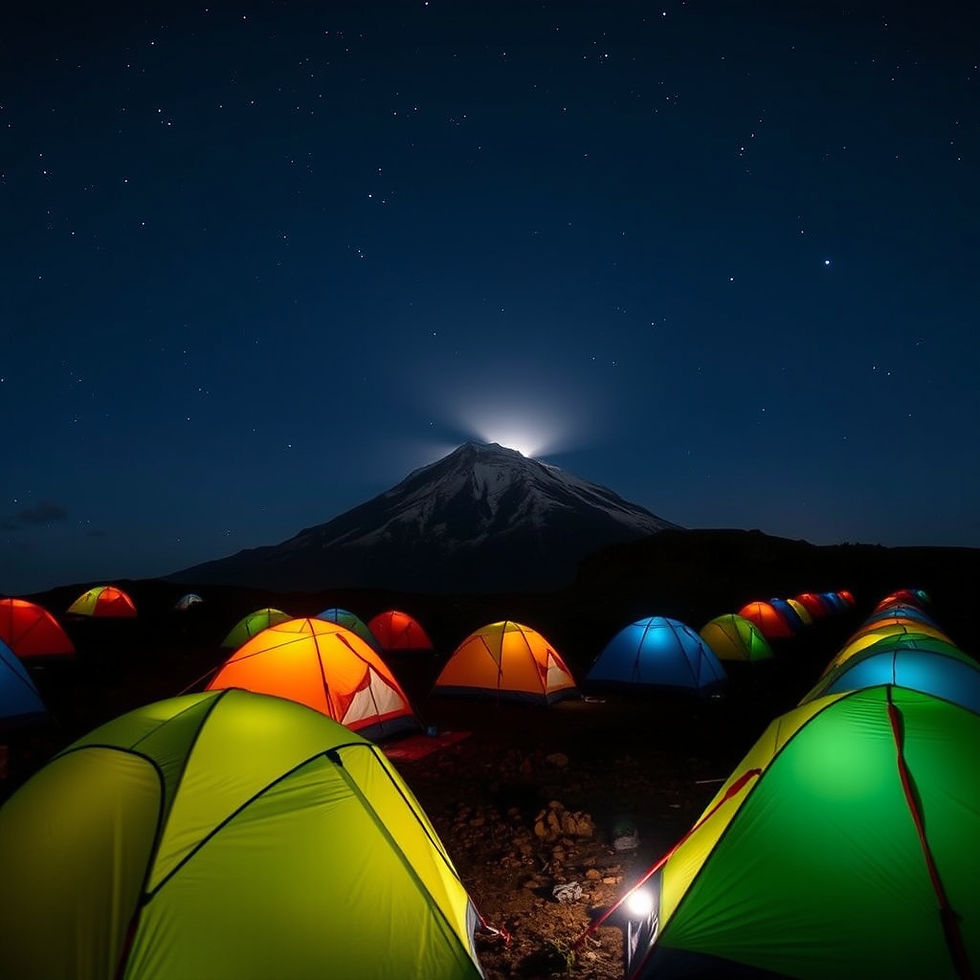
🥾 4️⃣ Lemosho Route – The Scenic Beauty
The Lemosho Route is what dreamers whisper about — a long, poetic trail that feels like walking through a living documentary.
Overview
Duration: 7–8 days
Accommodation: Camping
Success Rate: 85–90%
Pros
✅ Most beautiful scenery of all routes
✅ Excellent acclimatization time
✅ Fewer crowds, peaceful start
Cons
❌ Slightly more expensive
❌ Longer time commitment
Vibe & Experience
From the western forests of Kilimanjaro, the Lemosho Route unfolds like a slow cinematic rise. Mist drapes over ancient trees, volcanic ridges stretch endlessly, and by the time you reach Shira Plateau, you realize — this is not just a trail; it’s an awakening.
It’s quieter, more meditative. The extra days not only help your lungs — they help your mind catch up with the moment.
🧭 Travie Tip:If you climb to remember every detail — the light, the laughter, the horizon — Lemosho is your story.Best for: Travelers who value scenery, patience, and the highest odds of success.
🥾 5️⃣ Rongai Route – The Quiet Northern Trail
On the northern slopes of Kilimanjaro, far from the busier southern routes, lies Rongai — the path less taken.
Overview
Duration: 6–7 days
Accommodation: Camping
Success Rate: 70–80%
Pros
✅ Peaceful and uncrowded
✅ Drier side — great for rainy months
✅ Gentle ascent profile
Cons
❌ Less dramatic scenery than Lemosho or Machame
❌ Longer travel to trailhead
Vibe & Experience
Rongai feels like a secret. You climb through quiet forests and wild alpine zones, meeting fewer trekkers and more moments of solitude.It’s the introvert’s Kilimanjaro — calm, steady, quietly powerful.
✨ Travie Tip:For those who seek silence more than selfies, Rongai is where you find the mountain’s voice.Best for: Climbers who value solitude, or those trekking in the wet season.
📊 6️⃣ Route Comparison Table
Route | Days | Accommodation | Success Rate | Pros | Cons |
Marangu | 5–6 | Huts | 40–50% | Cheapest, simple logistics | Crowded, low success |
Machame | 6–7 | Camping | 70–80% | Scenic, popular, balanced | Busy, demanding |
Lemosho | 7–8 | Camping | 85–90% | Most scenic, high success | Longer, pricier |
Rongai | 6–7 | Camping | 70–80% | Quiet, dry, steady | Less diverse scenery |
✅ 7️⃣ Practical Recommendations
🌄 Choose Lemosho if scenery and success rate matter most.
🧗 Choose Machame for a classic, vibrant climb with solid acclimatization.
🌿 Choose Rongai for solitude or if climbing in the rainy season.
🛖 Choose Marangu only if you’re on a strict budget or prefer huts.
⏳ Always plan for 7+ days — extra time is your summit insurance.
🧭 Travie Tip:Every extra day on Kilimanjaro isn’t an expense — it’s an investment in reaching the top.
🗝️ 8️⃣ Key Conclusions
1️⃣ The route you choose directly determines your summit success rate.
2️⃣ Lemosho and Machame offer the best balance for most climbers.
3️⃣ Marangu is budget-friendly but risky for altitude adjustment.
4️⃣ Rongai is underrated — perfect for peace and dry conditions.
5️⃣ The best route is the one aligned with your fitness, time, and mindset.
💭 Travie Reflection:Every path on Kilimanjaro is a story. Choose the one that sounds like yours.
🌟 Highlights
Kilimanjaro’s routes vary in difficulty, scenery, and success rate.
Lemosho leads in beauty and success odds.
Machame remains the “classic Kilimanjaro experience.”
Marangu is comfortable but short on acclimatization.
Rongai is peaceful, especially in rainy months.
🧭 Recommendations for Every Climber
rain at least 6–8 weeks before your climb (cardio + endurance).
Prioritize hydration, sleep, and slow pacing.
Hire certified WFR-trained guides.
Respect porters — your journey depends on them.
Book climbs during dry seasons (Jan–Mar or Jun–Oct).
🌄 Conclusion – Many Roads, One Mountain
Kilimanjaro has many faces, but only one spirit.Whether you come from the lush forests of Lemosho, the iconic ridges of Machame, the quiet plains of Rongai, or the well-trodden huts of Marangu — the goal is the same: to rise with the mountain, not against it.
In the end, the summit isn’t the reward — the journey is.Because each route isn’t just a trail; it’s a conversation with Africa’s tallest teacher.
“There are many ways up the mountain, but the view is shared by all who endure.” – Zanzibar Gateway
✍️ Author BioTravie E360 is a cinematic travel storyteller exploring East Africa’s wild
beauty — from coral shores to snow-capped summits.Through Zanzibar Gateway, he blends storytelling, photography, and emotion to showcase journeys that transform travelers into witnesses of wonder.© 2025–2026 Zanzibar Gateway | Written by Travie E360 | All Rights Reserved


Comments